The Tala-Kangundo highway from Nairobi is terrible. It seems as if the road is in a constant state of decline. I find myself often commenting to strangers, “Hii bara bara ni mbaya sana” (“this road is very bad”), it’s a great ice breaker. We laugh and speculate about whether someone will tengeneza (“repair”) it any time soon, and then my Swahili vocabulary is just about extinguished. Side note: it’s hard to be funny when using a language which you have only mastered up to the level of the local toddler.
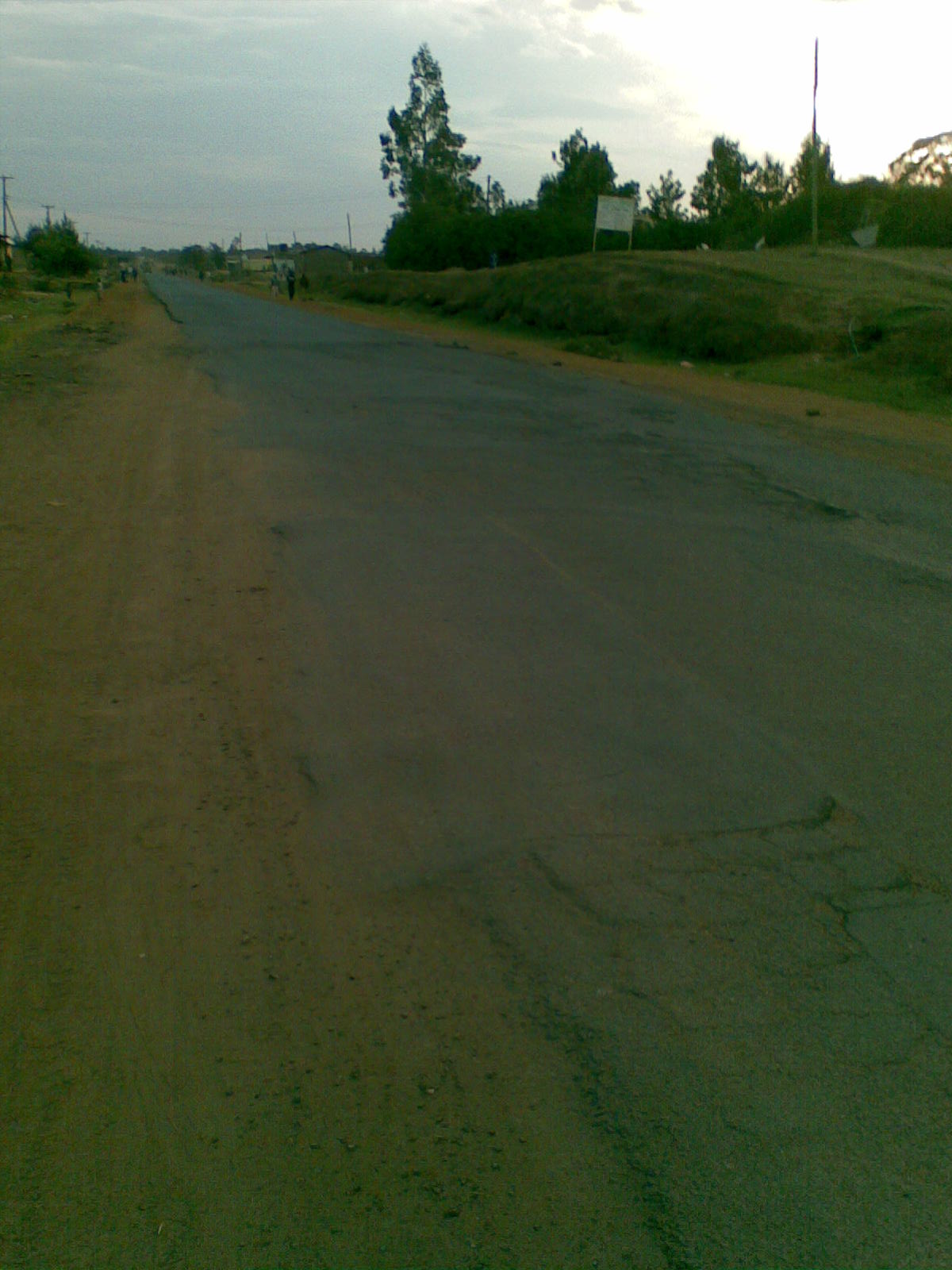
It’s kinda ridiculous that those youths scooping sand and rocks from the road side constitutes road repair. I’ve never seen any official work being done on that road. I guess it’s not so bad compared to other major roads I’ve traveled in Kenya, though. Western Kenya, terrible. Kajiado-Namanga, terrible. Kangundo-Machakos, terrible. Tala-Thika, terrible. Northern Kenya, what road? I always wonder, “It’s not like Kenya is poor, why doesn’t the government fix these roads?” There is a lot of money in Kenya but it’s apparently in the hands of the wrong people (the government, ironically. See my post on the Kings of Kenya).
Also ironic, the roads in Central province are pretty sweet. President Kibaki comes from there… coincidence or conspiracy?
 I had an epiphany the other day while walking home through an empty field. It had rained a bit so there was mud all over the place. I remember thinking it was good the grass was low because it allowed me to avoid the mud. The funny thing is, I’ve never seen one lawn mower in Kenya. I don’t even think the two words “lawn mower” have entered my brain once at the same time in the last two years… The only place I’ve ever seen anyone cutting grass is in my backyard and on the college compound, and they do it by hand.